Mental Health During Ramadan: 7 Tips for Emotional Wellbeing
This article has been researched and written by Mariam. AI has not been used in producing this article.
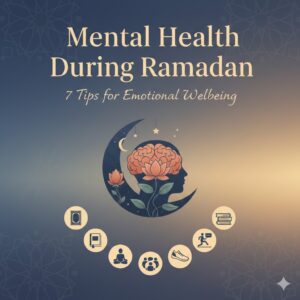 Ramadan is a month of deep spiritual renewal, gratitude, and community. But for many Muslim residents and expats across Dubai and the UAE, it can also bring unexpected emotional challenges. Sleep disruption, fatigue, heightened anxiety during Ramadan, and feelings of guilt when you fall short of your own expectations – these are more common than you might think. Prioritizing your mental health during this holy month is not a contradiction of faith. It is an act of self-compassion that allows you to show up fully – for your worship, your family, and yourself.
1. Protect Your Sleep With Intention
One of the biggest threats to mental health during Ramadan is disrupted sleep. Waking for Suhoor, staying for Taraweeh, and still meeting professional deadlines can leave the body and mind running on empty. Rather than seeing rest as laziness, treat it as ibadah – a way of preserving the body Allah entrusted to you. Short daytime naps of 20–30 minutes can significantly stabilize mood, reduce irritability, and support your emotional wellbeing throughout the day.
2. Nourish Your Body at Suhoor and Iftar
What you eat during your non-fasting hours has a direct impact on your mental health. Blood sugar fluctuations from sugary Iftar foods or skipping Suhoor altogether can contribute to mood swings, brain fog, and emotional sensitivity. Choose slow-release carbohydrates, protein, and healthy fats. Staying well-hydrated between Iftar and Suhoor is equally important – even mild dehydration is known to worsen anxiety during Ramadan and impair concentration.
3. Set Realistic Spiritual Goals
Perfectionism during Ramadan is a quiet source of stress that many people overlook. When you set goals that exceed what is realistically achievable alongside work, children, and health obligations, guilt and shame tend to follow. Protecting your emotional wellbeing means being honest about your capacity. A few sincere rakaat prayed with full presence carry more spiritual weight – and cause far less psychological harm – than an exhausted, resentful Khatm pushed through at midnight.
4. Stay Connected to Your Community
Isolation during Ramadan, particularly for expats living away from family in Dubai and across the UAE, can significantly worsen mental health. The communal dimension of Ramadan – shared Iftars, evening prayers, and acts of charity – is itself a form of psychological medicine. Make the effort to stay socially connected. If loneliness is weighing on you, reach out to a mosque community, a colleague, or a trusted friend. You do not have to experience this month alone.
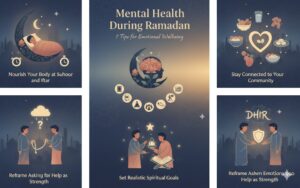
5. Practice Mindfulness Through Dhikr
Mindfulness does not require a meditation app. For Muslim residents navigating anxiety during Ramadan, the practice of dhikr – the rhythmic remembrance of Allah – is one of the most powerful tools available. Research consistently links mindfulness practices to reduced cortisol, lowered anxiety during Ramadan, and improved emotional wellbeing. Even five minutes of intentional dhikr after Fajr can anchor you emotionally for the hours ahead.
6. Recognize When Emotions Go Beyond “Ramadan Fatigue”
Tiredness and mild irritability are normal. But persistent sadness, uncontrollable worry, emotional numbness, or feeling unable to function are signals worth taking seriously. Mental health challenges do not observe a calendar – they do not pause for Ramadan. Mental health in UAE is a growing conversation, and seeking help is increasingly understood as a courageous, informed choice. If you have been struggling for more than two weeks, speaking with a professional is the right next step, not something to delay until Eid.
7. Reframe Asking for Help as Strength, Not Weakness
The most important shift in mental health awareness during Ramadan is cultural. Across communities in Dubai and the wider UAE, there remains a stigma around seeking emotional support – a belief that difficulty should simply be endured through prayer alone. Faith and professional support are not opposites. An anxiety therapist in Dubai can offer evidence-based tools that work alongside your spiritual practice, helping you move through this month with greater peace and clarity. Whether you are experiencing anxiety during Ramadan, processing grief, or managing burnout, reaching out is an act of wisdom.
You Do Not Have to Do This Alone

Ramadan asks a great deal of us – physically, emotionally, and spiritually. When the weight feels heavier than expected, that is not a failure of faith. It is a signal to seek support. Clear Minds Center provides compassionate mental health support in Dubai for individuals navigating exactly these challenges. From depression treatment to trauma therapy, our team is equipped to help you find your footing.
Clear Minds Center is here to support your mental health during Ramadan and beyond. Book a confidential consultation today.
Call us at +971- 58 -557 6220 & +971- 4 -557 6220 or visit our website to reserve your appointment.
Frequently Asked Questions
How does Ramadan affect mental health?
Ramadan can affect mental health in both positive and negative ways. Changes in sleep patterns (waking for Suhoor, staying up for Taraweeh), reduced food intake during daylight hours, and the pressure of balancing work, family, and religious obligations can increase fatigue, irritability, and anxiety during Ramadan. At the same time, the spiritual focus, community connection, and mindfulness practices of Ramadan have been shown to reduce stress and improve emotional wellbeing. Being aware of these effects helps you manage them proactively.
Can fasting during Ramadan cause depression or anxiety?
Fasting itself does not cause depression or anxiety, but the physical effects – such as low blood sugar, dehydration, and sleep deprivation – can trigger mood swings, irritability, and increased emotional sensitivity. For individuals who already experience anxiety during Ramadan or depression, these physical changes can amplify existing symptoms. If you notice your mental health significantly worsening during Ramadan, speaking with a professional is important. Clear Minds Center in Dubai offers confidential consultations tailored to your individual needs.
How can I protect my mental health while fasting?
To protect your mental health in UAE during Ramadan: prioritize sleep by taking short daytime naps; eat balanced, nourishing meals at Suhoor and Iftar; stay hydrated between Iftar and Suhoor; set realistic spiritual goals to avoid feelings of guilt; lean on your community for social support; and practice mindfulness or dhikr to reduce stress. If emotional difficulties persist, speaking with a therapist is a healthy, proactive step – and a sign of strength, not weakness.

Famous People with Dyslexia
Representation matters especially when there is a stigma around dyslexia and learning disabilities in general …

Third Culture Kids: Growing Strong Roots in a Mobile World
In a city like Dubai, it is not unusual to meet a child who has already lived in three countries, attended four different …

What Can I Do If Someone Is Bullying Me at School?
If someone keeps being mean to you, teasing you, hurting you, or leaving you out on purpose, this is called bullying…

Micro-Recovery: TraumaInformed Coping Tools Adults Can Use in Daily Life
Our nervous system is under constant pressure and stimulation. When you add the layer of …

Did You Know – Joyful Memories Can Be a Source of Pain?
I can’t count the number of clients who tell me: “Why does my brain only bring back negative thoughts?” – let’s explore

What Really Happens Behind the Door of Couples Therapy?
Couples don’t usually come to therapy because they stopped caring about each other – they …
