Separation Anxiety — Learning to Say Goodbye
This article has been researched and written by Yassine Tayie. AI has not been used in producing this article.
The Delays That Teach Trust
Separation doesn’t start the day the parent leaves for work — it starts much earlier, in those tiny gaps between a child’s cry and the parent’s response. These delays are not harmful; they’re how the child learns that someone will come. That trust becomes the foundation of attachment. As the child grows, parents can’t always be there immediately — and that’s a good thing. Through these small absences, the child begins to build an internal image of the parent: “Even when I don’t see them, they exist.” This is the beginning of object permanence, and it’s the first step towards feeling safe in the world.
Finding Comfort in What’s Left Behind
When the parent isn’t available, the child learns to soothe themselves. Sometimes it’s the thumb, sometimes a blanket — later, it becomes what Winnicott called a transitional object. It’s not “just a toy ”; it’s something that carries the trace of comfort, the feeling of being held. Through it, children start to discover that comfort can be recalled. They can sleep through the night with their object instead of needing the parent’s presence. They can play in another room while the parent cooks, still connected in some way.
The Play of Absence
Games like peekaboo or hide and seek aren’t just for fun — they’re early exercises in separation. In peekaboo, the baby learns that even when something disappears, it can come back. Later, hide and seek becomes a way to transform something once scary into something bearable, even joyful. The game works because it has rules — a beginning and an end. If the parent never hides, there’s no game. But if they hide too far, or for too long, the game stops being fun. That’s a good metaphor for life: children need to face tolerable doses of discomfort, not overwhelming ones.
For Parents Too
It’s not only about the child — parents also have to learn to tolerate their child’s discomfort without rushing to fix it.
That doesn’t mean being absent or cold. It means being present — available, calm, containing the child’s emotion instead of immediately removing it. Because part of growing up will hurt. A child will one day meet someone who’s unkind, be left out, get disappointed. We can’t stop that from happening — and maybe we shouldn’t. No one here has had a perfect life, or perfect parents. The perfect parent doesn’t exist. The good-enough parent is the objective— the one who stays, listens, and holds space for what hurts. Interact, agree to disagree, but still shows up.
When It Becomes More Than a Phase
It’s normal for young children to cry when saying goodbye. Separation anxiety usually appears around 8 months, peaks between 10 and 18 months, and fades around 2 years. It becomes something to look closer at when the fear is excessive for the child’s age, lasts for months, or starts interfering with their daily life — for instance, when they refuse to go to school or show physical signs of distress. In such cases, it’s not about “ spoiled” children, but about a system that got stuck somewhere between fear and reassurance. Therapy can help both the child and parents rebuild that bridge.
In the End
Separation is not just about absence. It’s the space where we get to be creative. Every goodbye, every reunion, teaches the child that safety can exist even when love isn’t visible. And for parents, it’s a reminder that letting go — even a little — is part of love too.
And for adults, separation anxiety can still echo quietly in the background.
It can appear in our relationships, in the fear of being left, or in the need to constantly stay connected. Sometimes it hides behind jealousy, control, or difficulty trusting. Often, it’s not about the present moment at all, but an old echo — the memory of a time when absence felt unbearable, when reassurance came too late, or not enough.

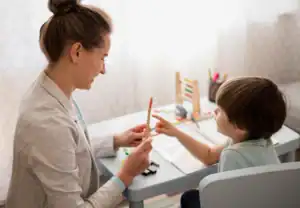
Child Therapist in Dubai: When Your Child Needs Professional Help
This article has been researched and written by Mariam. AI has not been used in producing this article. A child therapist in Dubai is a licensed psychologist or counsellor who specialises in supporting children’s emotional, behavioural, and developmental needs. Seeking help for your child is not a sign of failure as a parent — it…

What Is Anxiety? Causes, Symptoms & Treatment in Dubai
This article has been researched and written by Mariam. AI has not been used in producing this article. Anxiety is the mind and body’s natural response to perceived threat or uncertainty. At manageable levels, it is protective — it sharpens focus and prepares us for challenges. When anxiety becomes persistent, disproportionate, or difficult to control,…

55+ Relationship Questions Every Couple Should Ask to Deepen Their Connection
This article has been researched and written by Mariam. AI has not been used in producing this article. Questions for couples are one of the simplest and most effective ways to deepen intimacy, rebuild connection, and understand each other more fully. Whether you are newly together or have been partnered for years, meaningful conversation is…

Behaviour Therapy in Dubai — For Children & Adults
This article has been researched and written by Mariam. AI has not been used in producing this article. Behaviour therapy in Dubai is a structured form of psychological treatment focused on changing specific patterns of thinking and behaviour that are causing distress or difficulty. It is evidence-based, practical, and effective for a wide range of…
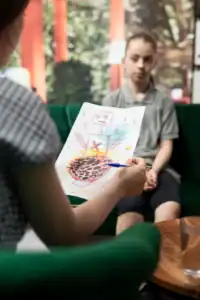
Pediatric Psychologist in Dubai — Child Development & Assessment
This article has been researched and written by Mariam. AI has not been used in producing this article. A pediatric psychologist in Dubai is a licensed clinical psychologist who specialises in the psychological assessment, development, and treatment of children and adolescents. They work with a broad range of childhood difficulties — from behavioural and emotional…
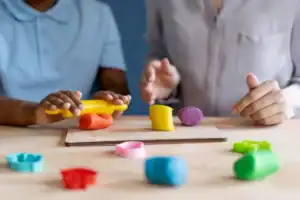
Play Therapy in Dubai — Finding the Right Support for Your Child
This article has been researched and written by Mariam. AI has not been used in producing this article. Play therapy in Dubai is a structured, evidence-based form of psychological therapy in which a trained therapist uses play as the primary medium for communication and healing. For children who do not yet have the language to…
