


Dyscalculia Assessment
What Is Dyscalculia?
Dyscalculia is a specific learning disability in math that affects a person’s ability to understand and work with numbers. It presents when children or adults struggle to understand numerical concepts, compare numbers, remember steps in solving a maths problem, or calculate mathematical operations. It can also include difficulties in applying maths to real-world tasks like money and time.
It is not because the child or adult is not trying or lacks intelligence; it is linked to a neurologically based learning difficulty that makes it harder for them to work with numbers.
An early dyscalculia assessment can make a huge difference in supporting a child to learn skills to improve mathematical reasoning, manage emotions like frustration, and build confidence in learning. Understanding whether or not a child has a specific learning disability in math is important to differentiate them from unmotivated children who would need a different approach to maths instruction.
Because learning differences often overlap, a comprehensive evaluation may also include a Dyslexia Assessment for reading and language difficulties or a Dysgraphia Assessment to identify challenges with handwriting and written expression.
Common Signs and Symptoms
When considering whether or not to complete dyscalculia testing in Dubai, it is important to understand the symptoms. Signs may first appear in childhood and can continue into adulthood if not identified and remediated early.
In Children
- Frequent mistakes when adding, subtracting, or estimating
- Difficulty telling time on analogue clocks
- Avoidance of homework or emotional distress during maths-related tasks
- Challenges with measurement (e.g., length, weight, capacity) or reading charts/graphs
- Difficulty understanding numbers or what quantities represent
- Trouble learning to count, skip-count, or recognise number patterns
- Slow or inconsistent recall of basic math facts (e.g., addition, subtraction, times tables)
- Confusion with maths symbols (+, –, ×, ÷, <, >)
- Struggling to follow steps in a maths method or remember multi-step instructions
In Adolescents and Adults
- Ongoing difficulty with mental arithmetic or practical maths
- Trouble managing money (budgeting, calculating change, splitting bills)
- Challenges with time management and planning tasks
- Anxiety or avoidance when faced with numerical tasks (e.g., tests, bills, work reports
- Feeling “slow” with numbers despite strengths in other subjects or job tasks
- Difficulty estimating distance, time, or quantities
- Problems remembering formulas, sequences, or procedural steps
- Reliance on calculators or written aids for simple calculations
Emotional and Behavioral Indicators
- Maths-specific anxiety or panic
- Low confidence or frustration during number-based tasks
- Avoidance of situations that involve maths (shopping, time-based tasks, academic courses)
- Feeling “stupid” or “not capable,” despite average or strong abilities in other domains
Why a Dyscalculia Assessment Matters
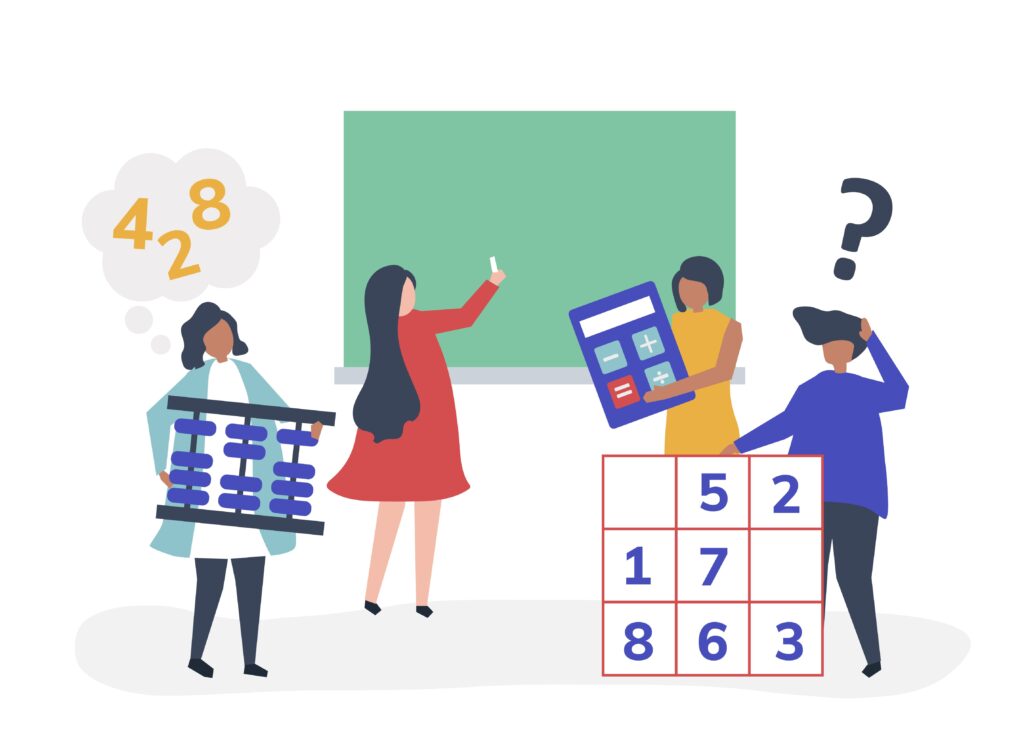
A formal dyscalculia diagnostic assessment will measure the gap in using and working with processing numbers and mathematical concepts. It can help differentiate between attentional issues, anxiety, or a mismatch of teaching vs the student’s current level of understanding.
At ClearMinds, the report generated after a math dyscalculia assessment guides schools and parents to best support their child and incorporate useful targeted strategies within their learning plans and at home.
Our Assessment Process
Our maths and dyscalculia assessment process is structured, supportive, and designed to identify the underlying causes of Dyscalculia.
Initial Consultation: An interview with the parent includes information about the child’s developmental history, academic progress, and behaviour.
Cognitive & Motor Skills Evaluation: Standardized tests assess number sense, working memory, processing speed, visual–spatial reasoning, basic calculations, word problems, and maths fluency.
Class Observation: We observe the child in the classroom during the Math session to understand how the child responds and behaves in class.
Comprehensive Report: Findings are interpreted and presented in a detailed report covering strengths, challenges, and diagnostic impressions.
Feedback Session: Personalised recommendations for home, school, and therapy to support written communication.
Who Can Benefit
A private dyscalculia assessment can support children and adults who struggle with number-based tasks or mathematical concepts.
Outcomes and Recommendations
After an assessment, there is a formal report that includes personalized recommendations and strategies to strengthen number sense, basic calculations, problem-solving, and maths fluency. It can include recommendations like extra time, manipulatives, visual aids, assistive technology, etc.
Recommendations can also include strategies to emotionally support the child, build resilience, and practical tips for parents/teachers to motivate and engage the child.
Contact a member of our team at +971-4-557-6220 to schedule an appointment. You can also email us at info@clearmindscenter.com or drop us a line through our online contact form.
Frequently Asked Questions
Dyscalculia is a learning disability affecting number understanding and math skills. Math anxiety is an emotional reaction, fear, or stress toward maths that can occur with or without a learning difficulty.
Our Safe Space