Dyslexia in Children: Parent’s Guide to Signs, Testing & Support
This article has been researched and written by Mariam. AI has not been used in producing this article.

Dyslexia is a neurological learning difference affecting how the brain processes written language — not intelligence, not effort, and not parenting. Your child is bright. They talk confidently, ask clever questions, and understand the world around them. But reading feels like a battle, spelling never seems to stick, and they are starting to dread school. If this sounds familiar, you are not imagining it — and you are not alone. This guide explains what dyslexia is, what to look for, and what to do next.
What Is Dyslexia?
Dyslexia is a specific learning difference rooted in how the brain processes phonological information — the sounds that make up written words. It has nothing to do with vision, intelligence, or how hard a child tries. Children with dyslexia typically have average to above-average intellectual ability, but their brains process the relationship between letters and sounds differently. This makes reading, decoding, and spelling disproportionately difficult. Many of the world’s most successful entrepreneurs, scientists, and artists have dyslexia — the difference is neurological, not a ceiling on what a child can achieve.
Signs of Dyslexia by Age Group
Knowing the signs of dyslexia at different stages helps parents act at the right time.
Ages 5–7: Early Signs of Dyslexia
- Difficulty learning the alphabet and letter-sound relationships (phonics)
- Struggling to sound out simple, unfamiliar words
- Confusing visually similar letters such as “b” and “d”, or reversing words like “was” and “saw”
- Difficulty remembering nursery rhymes or recognising rhyming patterns
- Slow to acquire sight words despite repeated exposure
- Avoidance of books and reading activities
Ages 8–12: School-Age Dyslexia Symptoms
- Poor spelling that does not improve with practice or effort
- Slow, effortful reading with little fluency or expression
- Difficulty putting thoughts into writing despite being verbally articulate
- Losing their place frequently while reading; re-reading lines
- Difficulty organising written work — ideas are clear verbally but not on paper
- Significant gap between listening comprehension and reading comprehension
These dyslexia symptoms are consistent across languages. If your child struggles with reading in their mother tongue as well as English, that is a particularly strong indicator that a formal dyslexia assessment in Dubai is warranted.
Why Dyslexia Is Often Missed in Dubai
In Dubai’s international school environment, dyslexia symptoms are frequently misattributed to multilingualism. When a child is navigating two or three languages at home and at school, teachers and parents naturally assume reading difficulties are a language adjustment issue — and advice to “wait and see” delays diagnosis by years. But dyslexia is a neurological condition that affects all languages, not just English. Multilingualism does not cause dyslexia, and it does not protect against it. The two can co-exist — and when they do, only a formal dyslexia test can separate them.
What Does a Dyslexia Test Involve?
A comprehensive dyslexia assessment in Dubai at Clear Minds Center typically spans 3–5 hours across two to three sessions. The dyslexia test includes:
- Cognitive ability testing (WISC-V) — to establish the child’s intellectual profile and identify the gap between potential and reading performance
- Reading and decoding assessments (WIAT-III) — measuring accuracy, fluency, and comprehension
- Phonological processing evaluation (CTOPP) — the core deficit in most dyslexia presentations
- Spelling and written expression tasks
- Clinical interview with parents
Following the dyslexia test, families receive a full written report including a diagnosis (where applicable), a profile of strengths and difficulties, and specific recommendations for school accommodations and intervention. Critically in Dubai: Cambridge, IB, and A-Level exam boards require an internationally standardised psychoeducational report to grant formal exam accommodations — extra time, a reader, or a scribe. For families approaching IGCSE or IB years, this documentation is not optional; it is essential.
Dyslexia commonly co-occurs with ADHD, anxiety, and developmental differences. If the assessment reveals concerns in these areas, Clear Minds Center can provide an ADHD assessment or developmental assessment as part of a comprehensive picture.
How to Support a Child With Dyslexia
Dyslexia cannot be cured — but with the right support, children make remarkable progress and go on to thrive academically and professionally.
- Structured literacy programmes: Evidence-based approaches such as Orton-Gillingham teach reading explicitly and multisensorially — the most effective method for children with dyslexia symptoms
- School accommodations: Once formally documented, children are entitled to extra exam time, use of a reader or scribe, and access to assistive technology in international schools and global exams
- Emotional support: Undiagnosed dyslexia frequently causes anxiety, low self-esteem, and school avoidance — these secondary impacts are real and deserve attention alongside the learning support
- Reframing the narrative: Children who understand their dyslexia — and see it as a difference rather than a deficit — consistently show better outcomes than those left without explanation
When to Act
If your child is consistently showing multiple signs of dyslexia and is aged 6 or older, now is the time to act — not wait. The gap between a child’s potential and their reading performance tends to widen with each year of undiagnosed dyslexia. Early identification leads to earlier intervention, better outcomes, and — for older children — the formal documentation needed to access exam accommodations before it is too late.
Your Child Deserves Clarity
If your child is bright but struggling with reading, spelling, or writing — trust your instincts. A dyslexia assessment in Dubai at Clear Minds Center provides the clarity, the documentation, and the roadmap your child needs to succeed. Book your consultation today.
📞 Call us: +971 4 457 4240 | 📅 Book a Dyslexia Assessment at ClearMinds Center today.
Frequently Asked Questions
What are the early signs of dyslexia parents should watch for?
The signs of dyslexia often become most visible between ages 5 and 8, once formal reading instruction has begun. Early dyslexia symptoms to look out for include: difficulty learning the alphabet and letter-sound relationships; struggling to sound out unfamiliar words; frequently confusing visually similar letters such as “b” and “d”; poor spelling that does not improve with practice; slow, effortful reading with little fluency; avoidance of reading activities; and trouble putting thoughts into writing despite being articulate verbally. In Dubai’s international school environment, parents often initially assume reading difficulties are related to multilingualism — but dyslexia is a neurological condition that affects all languages. If a child struggles with reading in their mother tongue as well as English, a dyslexia test is strongly warranted.
At what age can a child be tested for dyslexia, and what does the assessment involve?
Most children can be reliably assessed from age 6–7, once reading instruction has begun and patterns are clearly visible. A comprehensive dyslexia test at Clear Minds Center typically takes 3–5 hours across two or three sessions and involves cognitive ability testing (WISC-V), reading and decoding assessments (WIAT-III), phonological processing evaluation (CTOPP), spelling and written expression tasks, and a clinical interview with parents. Families receive a full written report including a diagnosis (if applicable), a profile of the child’s strengths and difficulties, and specific recommendations. For families in Dubai approaching IGCSE or IB examinations, an internationally standardised dyslexia assessment in Dubai report is required by Cambridge and IB exam boards to unlock formal accommodations.
Can dyslexia be cured, and what support options are available in Dubai?
Dyslexia cannot be cured — it is a lifelong neurological difference in how the brain processes written language. However, with the right support, children with dyslexia make remarkable academic progress. Effective approaches include structured literacy programmes based on Orton-Gillingham methods; school accommodations such as extra exam time, reader, and scribe access; and psychoeducational support to address the secondary emotional impacts — anxiety and low self-esteem — that are very common in children with undiagnosed dyslexia symptoms. In Dubai, private assessment centres, international school learning support departments, and organisations such as the UAE Dyslexia Support Group all offer resources. Early identification consistently leads to the best outcomes. The sooner signs of dyslexia are formally assessed, the more effectively support can be tailored.
ADHD vs ADD: What’s the Difference? [2026 Updated Guide]
This article has been researched and written by Mariam. AI has not been used in producing this article. ADHD — Attention-Deficit/Hyperactivity Disorder — is the only official clinical diagnosis. ADD is not a separate condition: it is simply an older term that was retired in 1987. If you or your child has been labelled with…
Depression: Understanding Symptoms, Causes & Treatment Options
This article has been researched and written by Mariam. AI has not been used in producing this article. Depression is a clinical mood disorder causing persistent low mood, loss of interest, and emotional exhaustion — lasting weeks or months regardless of external circumstances. You keep showing up: going to work, attending dinners, replying to messages.…
PTSD: Symptoms, Causes & Recovery – Complete Guide
This article has been researched and written by Mariam. AI has not been used in producing this article. PTSD — Post-Traumatic Stress Disorder — is a serious mental health condition triggered by experiencing or witnessing a traumatic event. It causes persistent flashbacks, nightmares, emotional numbness, and hypervigilance that can severely disrupt daily life. If you…

Anxiety Disorders Explained: Types, Symptoms & When to Seek Help
This article has been researched and written by Mariam. AI has not been used in producing this article. Worry is part of being human. But when anxiety stops being a passing feeling and starts shaping every decision you make – what you avoid, how you sleep, how you show up at work and…
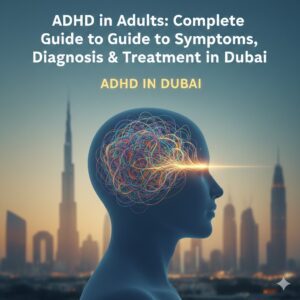
ADHD in Adults: Complete Guide to Symptoms, Diagnosis & Treatment in Dubai
This article has been researched and written by Mariam. AI has not been used in producing this article. For many adults living in Dubai, the struggle is familiar: missed deadlines, a desk that never stays organized, conversations you tuned out halfway through, and an inner voice that has spent decades whispering that you are simply…

Mental Health During Ramadan: 7 Tips for Emotional Wellbeing
This article has been researched and written by Mariam. AI has not been used in producing this article. Ramadan is a month of deep spiritual renewal, gratitude, and community. But for many Muslim residents and expats across Dubai and the UAE, it can also bring unexpected emotional challenges. Sleep disruption, fatigue, heightened anxiety during…
